What is a thin ceramic capacitor?
A thin ceramic capacitor, sometimes referred to as a chip capacitor, is a type of electronic component that serves as a passive component in electronic circuits. It is constructed using ceramic materials and is known for its compact size and versatility.
Adjustable Capacitors
While fixed capacitors are the standard choice in electronic circuits, there is also a category of adjustable capacitors that offer the flexibility to modify their capacitance within a specified range.
The adjustment of capacitance in variable capacitors is typically achieved by altering the surface area of opposing electrodes. Two common subtypes of variable capacitors are tuning capacitors, which are frequently adjusted for applications like radio tuning, and trimmer capacitors, which are fine tuned during circuit assembly and remain static thereafter.
The capacitance adjustment is facilitated using either a knob or a specialized driver. However, this mechanical approach to modifying capacitance poses limitations on achieving capacitors with high capacitance values. Consequently, variable capacitors are typically characterized by relatively small capacitance ratings, often at the picofarad (pF) level.
Film capacitors and ceramic capacitors are two common types of capacitors used in electronic circuits, and they have distinct characteristics. Here are the key differences between them:
Dielectric Material:
Film Capacitors: Film capacitors use a thin plastic or polymer film as the dielectric material. Common dielectric materials for film capacitors include polyester (Mylar), polypropylene, and polyethylene terephthalate (PET).
Ceramic Capacitors: Ceramic capacitors use ceramic materials as the dielectric. These ceramics vary, but common types include X7R, Y5V, and NPO ceramic dielectrics.
Capacitance Values:
Film Capacitors: Film capacitors tend to have higher capacitance values, typically ranging from picofarads (pF) to microfarads (µF).
Ceramic Capacitors: Ceramic capacitors generally have lower capacitance values, usually in the range of picofarads (pF) to nanofarads (nF). They are typically not used for high capacitance values.
Tolerance:
Film Capacitors: Film capacitors often have a higher tolerance, meaning their actual capacitance value is closer to the specified value. They are suitable for applications requiring precise capacitance values.
Ceramic Capacitors: Ceramic capacitors can have a wider tolerance range, and their actual capacitance value may vary more from the specified value. This makes them suitable for applications where precise capacitance is less critical.
Temperature Stability:
Film Capacitors: Film capacitors generally exhibit good temperature stability, with minimal changes in capacitance over a wide temperature range.
Ceramic Capacitors: The temperature stability of ceramic capacitors can vary depending on the type of ceramic dielectric used. Some ceramics, like NPO, offer excellent stability, while others, like Y5V, exhibit more significant variations with temperature.
Frequency Response:
Film Capacitors: Film capacitors are suitable for a broad range of frequencies, making them ideal for high frequency and audio applications.
Ceramic Capacitors: Ceramic capacitors are also used in various applications but may exhibit some nonlinearity in their capacitance with changing frequency.
Voltage Ratings:
Film Capacitors: Film capacitors often have higher voltage ratings, making them suitable for applications where higher voltage requirements are necessary.
Ceramic Capacitors: Ceramic capacitors come in various voltage ratings, but they may be limited in high voltage applications compared to film capacitors.
Size and Form Factor:
Film Capacitors: Film capacitors tend to be larger in physical size compared to ceramic capacitors.
Ceramic Capacitors: Ceramic capacitors are compact and come in various form factors, including surface mount types.
The choice between film capacitors and ceramic capacitors depends on the specific requirements of the electronic circuit, including capacitance value, tolerance, temperature stability, and other factors. Both types have their strengths and are used in a wide range of applications in the electronics industry.
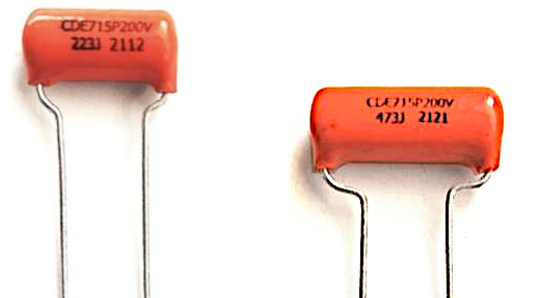
What are the advantages of film capacitors?
Film capacitors are widely used because of their superior characteristics. Film capacitors have a long shelf and service life, and are very reliable, with a very low average failure rate. They have low ESR (Equivalent Series Resistance), low self-inductance (ESL), and as a result very low dissipation factors.
Construction and properties
Film capacitors are manufactured from an exceptionally thin dielectric film, which may or may not have a metallic coating on one side. The film itself is incredibly thin, measuring less than 1 µm in thickness. Once the film reaches the desired thickness, it is sliced into narrow ribbons. The width of these ribbons is contingent upon the desired capacitance of the capacitor under production.
To construct the capacitor, two of these film ribbons are wound together into a coil, and they are often compressed into an oval shape to facilitate insertion into a rectangular housing. This shape is advantageous as it conserves valuable space on the printed circuit board.
Electrodes are introduced by connecting each one to a respective film. To eliminate any imperfections, a voltage is applied, capitalizing on the inherent self-healing property of film capacitors. Subsequently, the casing is sealed with silicon oil to safeguard the film coil from moisture. Finally, it is immersed in plastic to hermetically seal the internal components.
Standard film capacitors encompass a wide range of capacitance values, typically spanning from less than 1 nanofarad (nF) to 30 microfarads (µF). These capacitors can be tailored to meet specific voltage requirements, with voltage ratings starting as low as 50 volts (V) and extending beyond 2 kilovolts (kV). They are adaptable for use in diverse settings, including demanding conditions like high-vibration automotive environments, high-temperature scenarios, and high-power applications.
Film capacitors are prized for their exceptional performance, characterized by low losses and high efficiency, all while ensuring an extended service life.
Power film capacitors are used in power electronics devices, phase shifters, X-ray flashes and pulsed lasers, while the low power variants are used as decoupling capacitors, filters and in A/D convertors. Check out all of our film capacitors options to find what you need and contact GUOYUAN ELECTRONICS for more imformation.

 Discrete Semiconductor Products
 Motors, Actuators, Solenoids and Drivers
 RF/IF and RFID
 Integrated Circuits (ICs)
 Inductors, Coils, Chokes
 English