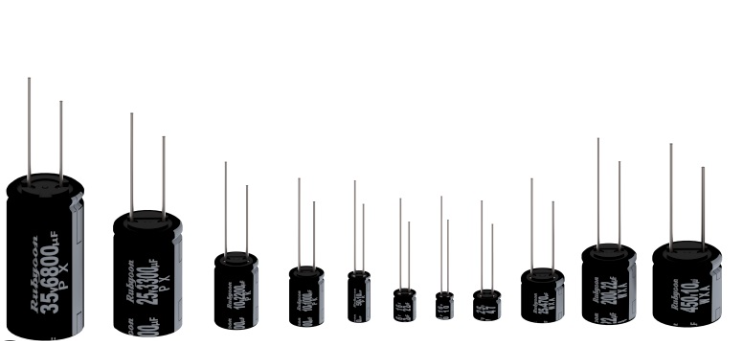
What Are The Advantages And Disadvantages Of Aluminum Electrolytic Capacitors?
What Are The Advantages And Disadvantages Of Aluminum Electrolytic Capacitors?
October 27 , 2023 in 0
Electrolytic capacitor definition
An electrolytic capacitor is a polarized capacitor which uses an electrolyte to achieve a larger capacitance than other capacitor types.
What are aluminum electrolytic capacitors?
Aluminum electrolytic capacitors are a common type of capacitor used in various electronic applications, offering numerous advantages such as high capacitance, high voltage ratings, and affordability. However, like all electronic components, they also come with their share of disadvantages.
An electrolytic capacitor represents a particular type of capacitor designed to harness the benefits of an electrolyte in order to achieve a larger capacitance than other capacitor types. The electrolyte itself is a fluid or gel carrying a substantial concentration of ions, which contributes to the unique characteristics of these capacitors. It's important to note that virtually all electrolytic capacitors are polarized, implying that the voltage at the positive terminal must consistently exceed that at the negative terminal.
The primary advantage of having a higher capacitance in electrolytic capacitors also brings about several associated drawbacks. These limitations include notable issues such as substantial leakage currents, variance in value tolerances, the presence of equivalent series resistance (ESR), and a finite operational lifespan. Electrolytic capacitors can exist in two primary forms: wet-electrolyte and solid polymer, with the latter demonstrating specific advantages in various applications. Commonly employed materials for these capacitors include tantalum and aluminum, although alternative materials may also find use in specialized cases.
Of particular interest, supercapacitors represent a distinct subgroup within the category of electrolytic capacitors. Often referred to as double-layer electrolytic capacitors, they boast exceedingly high capacitances, often reaching into the hundreds and even thousands of farads. The focus of this article, however, is on aluminum electrolytic capacitors, which tend to exhibit capacitance values typically falling within the range of 1µF to 47mF, while offering operational voltage ratings of up to several hundred volts in DC circuits.
These aluminum electrolytic capacitors find widespread application in numerous fields, including power supply systems, computer motherboard designs, and a host of household appliances. Their polarization, though a characteristic that necessitates attention, limits their use to DC circuits, where they serve various critical roles.
Characteristics of al electrolytic capacitor
Capacitance drift
The capacitance of electrolytic capacitors drifts from the nominal value as time passes, and they have large tolerances, typically 20%. This means that an aluminum electrolytic capacitor with a nominal capacitance of 47µF is expected to have a measured value of anywhere between 37.6µF and 56.4µF. Tantalum electrolytic capacitors can be made with tighter tolerances, but their maximum operating voltage is lower so they cannot be always used as a direct replacement.
Polarity and safety
As a result of the structural composition of electrolytic capacitors and the specific properties of the electrolyte utilized, it is imperative for these capacitors to remain forward biased. In essence, this dictates that the positive terminal must consistently maintain a higher voltage level than the negative terminal. When, however, the capacitor experiences reverse biasing, characterized by a reversal in voltage polarity between its terminals, it can give rise to detrimental consequences. The insulating aluminum oxide, which serves as the dielectric material within the capacitor, is at risk of damage and could potentially begin functioning as a short circuit connecting the two capacitor terminals. In this scenario, a surge in current may occur, leading to overheating. As the capacitor overheats, the electrolyte within it may heat up to the point of leaking or even vaporizing, potentially causing the capacitor's enclosure to rupture. This entire process is typically triggered when reverse voltages exceed approximately 1 volt and beyond.
In the interest of safety and to prevent the enclosure from rupturing under the immense pressure generated during overheating, a safety valve is strategically incorporated within the capacitor's housing. This safety valve is often created by introducing a score or groove into the upper surface of the capacitor, which is designed to open in a controlled fashion when the capacitor reaches critical temperatures. This mechanism ensures that excess pressure can be safely released, averting a potentially dangerous situation.
Furthermore, it's important to consider that electrolytes used in these capacitors may contain toxic or corrosive elements. Consequently, when handling and maintaining electrolytic capacitors after they have overheated, additional safety precautions may be necessary, including proper cleaning procedures and handling precautions to safeguard individuals from potential harm.
It is worth noting that there exists a specialized category of electrolytic capacitors designed for applications involving alternating current (AC). These capacitors are engineered to withstand the effects of reverse polarization and are commonly referred to as non-polarized or NP type capacitors. This type offers a practical solution for scenarios where the polarity of the voltage may frequently change, ensuring that the capacitor operates effectively and safely.
Construction and properties of al electrolytic capacitors
Aluminum electrolytic capacitors comprise a construction that consists of two aluminum foils and an interposed paper spacer that has been permeated with an electrolyte. Of the two aluminum foils, one is coated with an oxide layer and assumes the role of the anode, whereas the uncoated foil functions as the cathode. Under standard operating conditions, it is crucial for the anode to maintain a positive voltage with respect to the cathode. This is why the cathode is conventionally identified by a negative sign, typically denoted along the body of the capacitor to provide clear polarity information.
The assembly process involves stacking the anode, the paper spacer saturated with electrolyte, and the cathode. Subsequently, this stack is meticulously rolled up and positioned within a cylindrical enclosure. The capacitor is then integrated into the electrical circuit by connecting it via pins. In this regard, there are two primary geometric configurations that are widely employed: axial and radial.
In axial capacitors, a single pin is situated at each end of the cylindrical enclosure, facilitating its connection within the circuit. Conversely, in the radial configuration, both pins are positioned on the same end of the cylindrical enclosure, offering an alternative orientation for electrical integration. These two geometries provide flexibility in capacitor installation, catering to different circuit requirements and design considerations.
Check out all of our electrolytic aluminum capacitor options to find what you need and contact GUOYUAN ELECTRONICS for more imformation.

 Discrete Semiconductor Products
 Motors, Actuators, Solenoids and Drivers
 RF/IF and RFID
 Integrated Circuits (ICs)
 Inductors, Coils, Chokes
 English