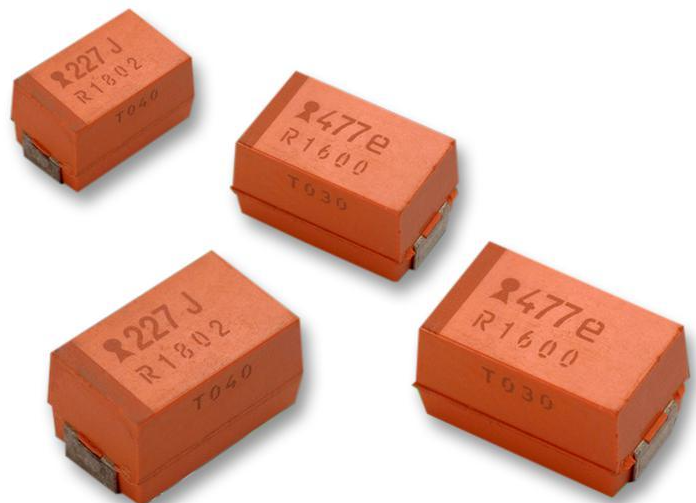
Tantalum and Niobium: Similarities and Differences
Tantalum and Niobium: Similarities and Differences
October 27 , 2023 in 0
Tantalum and niobium are two chemical elements that belong to the group of transition metals in the periodic table and share several similarities but also exhibit distinct differences in their properties and applications.
What Are Niobium Capacitors?
Niobium capacitors, often referred to as niobium electrolytic capacitors, are a specialized type of electrolytic capacitor that utilizes niobium as the material for the anode (positive electrode). These capacitors are designed for specific applications that require high capacitance and stable performance, particularly in situations where compact size, high reliability, and low equivalent series resistance (ESR) are essential.
Anode Material: Unlike traditional aluminum electrolytic capacitors where aluminum is used as the anode material, niobium capacitors employ niobium. Niobium offers advantages such as high volumetric efficiency and excellent reliability.
High Capacitance: Niobium capacitors are known for their high capacitance values relative to their size. This characteristic makes them valuable in applications where space constraints are a concern, but substantial energy storage is required.
Low Equivalent Series Resistance (ESR): Niobium capacitors typically have lower ESR compared to aluminum electrolytic capacitors. This low ESR enhances their performance in applications that demand rapid charge and discharge cycles.
Stable Characteristics: Niobium capacitors demonstrate stability in terms of capacitance and ESR over a wide temperature range, making them suitable for use in extreme temperature environments.
Compact Size: Niobium capacitors are compact and lightweight, making them advantageous in situations where miniaturization is a priority.
Long Service Life: These capacitors offer a long service life, which is a desirable feature in applications where frequent maintenance or replacement is not practical.
Polarity: Niobium capacitors are polarized, meaning they must be connected with the correct polarity (positive to positive and negative to negative) to operate effectively. Reversing the polarity can result in damage or failure.
What Are Tantalum Capacitors?
Tantalum capacitors, often referred to as tantalum electrolytic capacitors, are a type of electrolytic capacitor known for their high capacitance, compact size, and reliable performance. These capacitors use tantalum as the material for the anode (positive electrode) and are widely used in electronic devices and circuits where space efficiency and stable electrical characteristics are crucial.
Tantalum Anode: Tantalum capacitors utilize tantalum metal as the anode material. Tantalum's characteristics, such as high conductivity and the formation of a stable oxide layer, contribute to the capacitor's performance.
High Capacitance: Tantalum capacitors offer a high capacitance relative to their size. This high capacitance is beneficial for applications that require substantial energy storage in a compact form.
Stable Electrical Characteristics: Tantalum capacitors exhibit stable electrical characteristics over a wide range of temperatures. This makes them suitable for use in applications with varying thermal conditions.
Low Equivalent Series Resistance (ESR): Tantalum capacitors typically have low ESR, which allows them to handle rapid charge and discharge cycles effectively. This property is especially valuable in power supply and filtering applications.
Polarity: Tantalum capacitors are polarized, meaning they have a specific positive and negative terminal. Connecting them with reversed polarity can result in catastrophic failure, including leakage or even explosion. This limits their use in AC circuits and requires careful attention to proper orientation during installation.
Compact Size: Tantalum capacitors are known for their small physical size and light weight. This makes them suitable for miniaturized electronic devices and applications with space constraints.
Long Service Life: Tantalum capacitors have a long operational life, contributing to the longevity and reliability of electronic systems.
Similarities
Tantalum and niobium are a pair of metallic elements sharing several commonalities, such as their soft, ductile, and lustrous properties, as well as their remarkable high melting and boiling points. In addition, both exhibit remarkable resistance to corrosion by acidic substances and possess commendable thermal and electrical conductivity. Furthermore, tantalum and niobium feature comparable atomic structures, differing by just a solitary electron in their outermost electron shells. In the natural world, these elements are frequently discovered in close association with each other within minerals like columbite, tantalite, pyrochlore, and loparite. Their strikingly analogous chemical behavior renders their separation from one another a challenging endeavor.
The applications of these two elements span an extensive array of industries. They are employed as additives or alloying agents in the realm of steels and superalloys, thereby enhancing the strength, toughness, ductility, and resistance to both high temperatures and corrosion in the materials. Moreover, tantalum and niobium find crucial roles in the realm of capacitors, fundamental components tasked with the storage of electric charge and energy. Tantalum capacitors, in particular, feature an impressive capacitance per unit volume, rendering them indispensable in an array of portable electronic devices, computers, and automotive electronics. On the other hand, niobium capacitors, while offering lower capacitance, boast a higher voltage rating, making them indispensable in power supplies and converters.
Both elements also occupy niches within specialized applications that leverage their distinctive attributes. For instance, niobium-tin alloys are harnessed to craft superconducting magnets employed in medical imaging devices, particle accelerators, and fusion reactors, thanks to their superconducting properties. Furthermore, tantalum pentoxide, a tantalum-based compound, finds utility as a coating material for glass lenses, furnishing them with an elevated refractive index that enhances their optical performance.
Differences
tantalum is much denser than niobium, with a density of 16.65 g/cm3 compared to 8.57 g/cm3 for niobium. Tantalum also has a higher melting point (2996 °C) and boiling point (5425 °C) than niobium (2477 °C and 4744 °C respectively). Tantalum is slightly harder than niobium, with a Mohs hardness of 6.5 versus 6 for niobium.
Another difference is their availability and price. Tantalum is much rarer than niobium, with an estimated crustal abundance of 2 ppm versus 20 ppm for niobium. Tantalum is also more expensive than niobium, with raw ore prices sometimes reaching ten times the price per pound of niobium ore. The supply of tantalum is also more volatile than that of niobium, due to political instability and environmental issues in some of the major producing countries such as Congo, Rwanda, Brazil, and Australia. It’s important to note that responsible tantalum suppliers such as Admat do not supply metals that originated in conflict areas such as the Congo unless the raw materials meets the stringent conditions determined by the RMI (Responsible Minerals Initiative) and the RMAP (Responsible Minerals Assurance Process).
Check out all of our electrolytic capacitor options to find what you need and contact GUOYUAN ELECTRONICS for more imformation.

 Discrete Semiconductor Products
 Motors, Actuators, Solenoids and Drivers
 RF/IF and RFID
 Integrated Circuits (ICs)
 Inductors, Coils, Chokes
 English