What Are Power Entry Connectors? How Do They Work?
What Are Power Entry Connectors? How Do They Work?
November 13 , 2023 in 0
In the realm of electronics, the availability of power is paramount. Serving as the crucial bridge between a device and its power source, power connectors play a pivotal role. In consumer electronics, these connectors are the interfaces through which devices are plugged into wall receptacles to access the necessary electrical energy.
Introduction of Power Entry Connectors
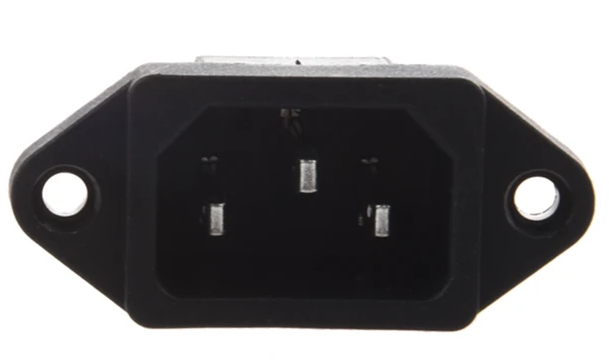
Power entry connectors, often referred to as power inlets, are components used to connect electronic devices to a power source. These connectors are commonly found in various electrical and electronic equipment, including appliances, computers, industrial machinery, and more. They serve as the interface through which electrical power is supplied to the device.
Power connectors are devices designed exclusively for the purpose of allowing an electrical current to flow, specifically to provide power to a device, without accommodating data streams or more intricate functionalities. While versatile and compatible with various electronics, it's crucial for customers to identify the specific connector type that aligns with the geometry and electrical requirements of their devices.
These connectors can facilitate either alternating current (AC) or direct current (DC). AC plugs and sockets are instrumental in connecting devices to the primary power supply of a building. Variations in voltage, current rating, size, and design exist based on the national standards of the respective country. On the other hand, DC connectors come in standardized types that are not interchangeable, preventing inadvertent attempts to connect incompatible plugs and sockets. They are commonly found on electronic devices, automotive accessories, battery packs, and numerous other products.
While not a strictly objective metric, a "high power" connector is generally defined as one capable of carrying over 30 amperes of current.
How Power Entry Connectors Typically Work:
Connector Types:
AC Power Inlets: These connectors are used for connecting devices to an alternating current (AC) power source, such as a wall outlet. They often include pins or prongs that align with the power outlet's configuration.
DC Power Inlets: For devices that require direct current (DC) power, these connectors are used. They may have different configurations, such as barrel connectors, to match the specific requirements of the device.
Electrical Contacts:
Power entry connectors consist of electrical contacts that establish a connection between the power source and the device. These contacts may be designed to handle different levels of voltage and current, depending on the application.
Grounding:
Many power entry connectors include a grounding mechanism to ensure the safety of the connected device and its users. This is often in the form of a grounding pin or contact that connects to the grounding circuit in the power source.
Locking Mechanisms:
Some connectors come with locking features to secure the connection and prevent accidental disconnection. This is particularly important in applications where vibrations or movements might occur.
EMI/RFI Filtering:
In certain applications, power entry connectors may include electromagnetic interference (EMI) or radio-frequency interference (RFI) filtering components. These help to reduce or eliminate unwanted electromagnetic noise that could affect the performance of the connected device.
Fuse or Circuit Breaker:
To protect the device from power surges or overloads, some power entry connectors incorporate a fuse or circuit breaker. This additional feature helps prevent damage to the device by interrupting the power supply in case of a fault.
Compatibility:
Power entry connectors are designed to meet specific standards and regulations to ensure compatibility with power sources and devices. Users should choose connectors that adhere to safety standards relevant to their region.
Uses Of Power Entry Connectors
Although it comes in all shapes and sizes and with various abilities, options, and accessories, the purpose of a power connector always comes back to one all-important thing: power. These connectors are used primarily for energy transfer and it is a task they perform admirably.
The insulation of a power entry connector is a critical aspect of its design to ensure the safety and reliability of the electrical system. The insulation in a power entry connector serves several purposes:
Electrical Safety: Insulation prevents the flow of electric current between conductive parts of the connector and the external environment or adjacent conductive elements.
Short CircuitsPrevention: Insulation between conductive elements within the connector prevents unintended electrical connections or short circuits that could damage the equipment or pose a fire hazard.
Environmental Protection: Insulation helps shield the internal conductive elements from environmental factors such as moisture, dust, and contaminants.
Dielectric Strength: The insulation material must have adequate dielectric strength to withstand the voltage levels present in the electrical system without breaking down.
It's important to note that power entry connectors are designed for specific applications and environments, and the choice of insulation material and design considerations will vary accordingly. Additionally, adherence to relevant safety standards and regulations is essential to ensure that the insulation meets the required specifications for the intended use of the connector.
What Is The Relationship Between Power Entry Connectors And Power Entry Modules?
Power entry connectors and power entry modules are related components used in electronic and electrical systems to provide a means for connecting power to a device.
A power entry module (PEM) is a more comprehensive component that usually integrates additional features beyond a simple power entry connector.
It typically includes a power entry connector, a line filter (to reduce electromagnetic interference), and sometimes a switch or circuit breaker for on/off control and overcurrent protection.
Power entry modules are designed to simplify the power entry and filtering aspects of a device, providing a compact and standardized solution.
Relationship:
In many cases, the terms "power entry connector" and "power entry module" are used interchangeably, as power entry modules often contain the connector as an integral part.
The power entry module can be seen as an enhanced version of the power entry connector, incorporating additional features for power management and electromagnetic interference suppression.
In summary, while a power entry connector is a fundamental component for connecting power to a device, a power entry module is a more complete solution that includes additional features like filtering and protection, offering a more integrated and standardized approach to power entry in electronic systems.
GUOYUAN ELECTRONICSoffers a variety of connector series so you can find the power connectors you need. All power connectors boast low contact resistance, an environmentally conscious feature that saves energy by reducing the amount of energy converted to heat during operation.

 Discrete Semiconductor Products
 Motors, Actuators, Solenoids and Drivers
 RF/IF and RFID
 Integrated Circuits (ICs)
 Inductors, Coils, Chokes
 English