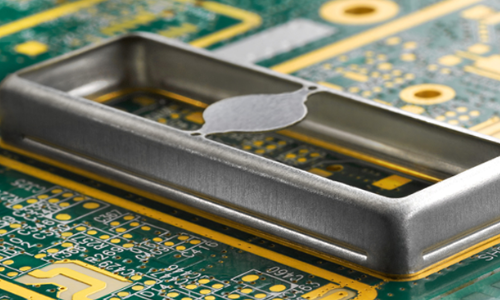
The emergence of software-defined radio (SDR) exemplifies this shift, where RF signals are swiftly converted to digital form for further processing using software. Elektor introduces an affordable RF shield for the Arduino, based on the Si5351 oscillator IC, which facilitates the down-conversion of RF signals to audio frequencies. This enables subsequent processing on a PC.
Upon reviewing the shield's schematic, it becomes apparent that its primary function is to allow the Arduino to manipulate the radio by adjusting the oscillator frequency rather than performing full-fledged SDR tasks. The in-phase and quadrature (IQ) signals are routed directly to the PC's soundcard via a microphone or line-in jack, bypassing the Arduino.
While it's regrettable that the shield doesn't fully exploit the potential of more advanced 32-bit Arduinos or compatible CPU and FPGA boards, there's still value in having a programmable signal source on the Arduino. Moreover, the updated board offers improved breakout for the oscillator signals, enhancing ease of use and accessibility for experimentation and tinkering.
RF Shielding vs. EMI Shielding
RF shielding, often referred to as radiation shielding, isn't always synonymous with electromagnetic interference (EMI) shielding, despite both aiming to protect sensitive devices from unwanted signals.
The main distinction lies in the frequency range being shielded against. RF shielding focuses on shielding a device from signals within the frequency range typically used for radio transmission. On the other hand, EMI shielding addresses higher frequencies utilized in applications extending beyond radio transmission.
Both types of signals have the potential to interfere with electronic devices, necessitating protection against both RF and EMI. Consequently, while RF shielding and EMI shielding are commonly used interchangeably, they do not precisely denote the same concept.
Why Shield Against RFI?
We understand that RF signals have the potential to interfere with various electronic devices, but what exactly does this interference entail? The effects can vary widely, ranging from minor inconveniences to severe threats to safety.
In the absence of adequate RF shielding, certain electronic cables may experience signal loss due to signal leakage, resulting in degradation of information transmission along the device's circuits. While this issue may lead to signal distortion and frustration, it typically poses minimal risk.
A basic example of RF shielding can be observed in standard microwave ovens. The interior metal enclosure of the microwave functions as a Faraday cage, a classic form of RF shielding, preventing radiation from escaping and reaching users.
However, the need for shielding against RFI extends beyond these basic scenarios and can have far-reaching implications. For instance, RF signals can be exploited to compromise the security of radio-frequency identification (RFID) chips used in biometric passports and various other devices. Moreover, RF interference can disrupt cellular networks vital for communication and interfere with the operation of medical devices like MRI machines.
Interference from RF signals has the potential to cause malfunctions in devices of all kinds. Therefore, anyone involved in engineering electronic devices must be mindful of the risks posed by RF interference and take proactive measures to safeguard their devices.
Sources of RFI
RFI originates from a diverse array of sources, encompassing both natural phenomena and human activities. While humans did not invent radio signals, they have harnessed and generated them, leading to the prevalence of both natural and man-made RFI.
Natural RF Signals
Natural RFI primarily stems from weather phenomena, including lightning strikes, snowstorms, and dust storms. Other natural contributors to RF signals include static electricity, solar flares, and cosmic noise.
Man-Made RF Signals
Man-made RFI can be either intentional or unintentional, yet regardless of its intent, it has the potential to disrupt nearby electronic devices.
Unintentional man-made RFI originates from sources such as power transmission lines, generators, electric motors, and similar equipment. Intentional RFI, although not always malevolent, can be employed to jam radar systems or intentionally interfere with aerospace and defense equipment. Examples of less malevolent intentional RFI include signals from radar systems, satellites, and radio transmitters.
How RF Shielding Works
Radio waves permeate our environment, unseen yet omnipresent. How, then, does a relatively straightforward RF shield manage to thwart these pervasive signals and ensure the smooth operation of its associated device?
These radio waves carry energy and are conductive, meaning they can be manipulated through clever design and the strategic use of conductive materials. A well-engineered RF shield effectively intercepts and redirects incoming RF signals away from the device it aims to safeguard.
It's crucial to recognize that RF shielding isn't solely about shielding devices from radiated signals traversing through the air from distant sources to reach your device. While this scenario is a common concern requiring attention in RF shielding, many RF shields are devised to block RFI originating from within the same device. Additionally, some RF shields are engineered to prevent RF signals from escaping, rather than merely obstructing their entry.
Certain materials and shapes exhibit superior performance in RF shielding applications. We will delve deeper into the design principles and materials utilized in RF shielding in a subsequent section of this guide.
GUOYUAN ELECTRONICS might offer a range of custom rf shield with different specifications and features. You can visit our website or contact us directly to inquire about radio frequency shielding offerings, specifications, pricing, and any other details you may need to make an informed decision.

 Discrete Semiconductor Products
 Motors, Actuators, Solenoids and Drivers
 RF/IF and RFID
 Integrated Circuits (ICs)
 Inductors, Coils, Chokes
 English