Analog switches are quickly becoming a major trend in mechanical keyboards, and Keychron is fully embracing this innovation. Following the success of the premium Keychron Q1 HE, the company has introduced Gateron purple analog switches to its popular Keychron K2, resulting in the new Keychron K2 HE.
While the K2 HE may not be the most high-end keyboard in Keychron's lineup, it still delivers an outstanding typing experience. This compact keyboard offers all the essential keys with a satisfying tactile response, complemented by vibrant RGB lighting. Although it doesn't match the build quality of Keychron's more expensive models, the K2 HE provides great value for its price. The inclusion of analog switches adds an extra layer of control, making it an easy recommendation for those seeking enhanced functionality.
What is an Analog Switch?
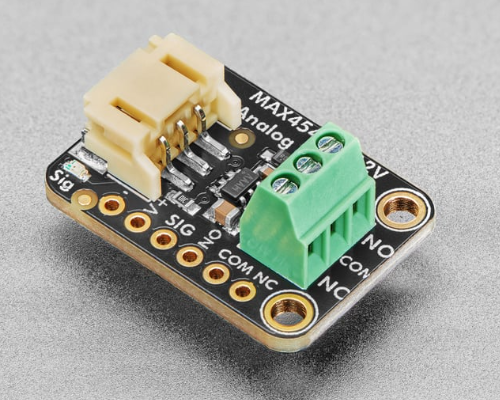
An analog switch, often referred to simply as a "switch," is a device designed to switch or route analog signals—signals that can vary continuously within a specified range—based on the level of a digital control signal.
Typically implemented using a "transmission gate," an analog switch functions similarly to a relay, allowing or blocking the flow of signals depending on the control input.
For instance, an analog switch can mute an audio signal based on a MUTE command or direct one of two signals to a headphone amplifier. These switches are most commonly built using CMOS technology in integrated circuits, with companies like Maxim offering hundreds of options.
What are the Applications of Analog Switches?
Analog switches are versatile components used in a wide range of applications where the control and routing of analog signals are required.
1. Audio and Video Equipment:
Audio Switching: Analog switches are used to route audio signals in devices like mixers, amplifiers, and receivers, allowing for selection between different audio sources.
Video Signal Routing: They can switch video signals in devices like televisions, monitors, and video switchers, enabling the selection of different video inputs.
2. Data Acquisition Systems:
Signal Multiplexing: Analog switches are used in data acquisition systems to route multiple sensor inputs to a single analog-to-digital converter (ADC), effectively multiplexing signals.
Sensor Selection: They allow for the selection of different sensors or signal paths in measurement and monitoring systems.
3. Communication Devices:
RF Switching: Analog switches are used in radio frequency (RF) communication systems to switch between different antennas, frequency bands, or signal paths.
Modem and Transceiver Circuits: They are used in modems and transceivers to manage signal routing between various communication channels.
4. Test and Measurement Equipment:
Signal Routing: Analog switches are used in oscilloscopes, signal generators, and other test equipment to switch between different input signals or test configurations.
Calibration Systems: They allow automated switching between reference signals and test signals during calibration procedures.
5. Consumer Electronics:
Switching Power Supplies: Analog switches are used to control power distribution in devices like smartphones, tablets, and laptops, allowing for efficient power management.
Touchscreen and Display Control: In devices with touchscreens, analog switches help manage signal routing between touch sensors and the processing unit.
6. Medical Devices:
Electrocardiogram (ECG) Machines: Analog switches route signals from multiple electrodes to the processing unit in ECG machines.
Imaging Equipment: They are used in medical imaging devices like MRI and ultrasound machines to switch between different signal paths.
7. Industrial Automation:
Process Control: In automation systems, analog switches are used to manage signals from various sensors and actuators, ensuring proper control of industrial processes.
Signal Conditioning: They help in selecting and routing signals in industrial control systems for monitoring and feedback purposes.
8. Instrumentation:
Precision Measurement: Analog switches are employed in instrumentation systems to route high-precision analog signals, ensuring accurate measurements.
Environmental Monitoring: They are used to switch between different sensors in environmental monitoring systems, such as temperature, humidity, and pressure sensors.
9. Gaming Devices:
Controller Inputs: Analog switches are used in gaming controllers to manage multiple input signals, such as joystick movements and button presses.
10. Home Automation:
Smart Home Devices: In smart home systems, analog switches help manage signals from various sensors and control devices, such as lighting, thermostats, and security systems.
What is the Difference between Analog and Digital Switches?
The key differences between analog and digital switches lie in the types of signals they handle and their functions:
1. Signal Type:
Analog Switches: These switches are designed to handle analog signals, which can vary continuously within a specified range. Analog signals represent data in a form that can take on any value within a range, such as audio signals, voltage levels, or sensor outputs.
Digital Switches: Digital switches handle digital signals, which are discrete and typically have only two states: ON (1) or OFF (0). Digital signals represent binary data used in digital circuits and logic devices.
2. Functionality:
Analog Switches: Analog switches are used to route or switch analog signals, allowing them to pass through or be blocked based on a control signal. They are often used in applications where signal integrity and precise control of the signal's amplitude, frequency, and phase are important.
Digital Switches: Digital switches are used to control digital signals, either allowing or blocking the passage of binary data. They are commonly used in digital circuits, such as in logic gates, microcontrollers, and processors, to control the flow of binary information.
3. Implementation:
Analog Switches: Typically implemented using transmission gates or similar technologies, analog switches are designed to minimize distortion and maintain the quality of the analog signal.
Digital Switches: Digital switches are often implemented using transistors, which act as simple on-off switches in digital circuits. Their primary function is to switch between the high (1) and low (0) states without regard to intermediate values.
4. Applications:
Analog Switches: Commonly used in audio equipment, data acquisition systems, signal routing in communication devices, and any application where precise control of analog signals is required.
Digital Switches: Widely used in computers, digital electronics, logic circuits, and any system that processes digital data.
In summary, the main difference is that analog switches control variable analog signals, while digital switches control binary digital signals.
GUOYUAN ELECTRONICS can offer a wide range of analog device with different specifications and features. You can visit our website or contact us directly to inquire about analog switch ic, specifications, pricing, and any other details you may need to make an informed decision.

 Discrete Semiconductor Products
 Motors, Actuators, Solenoids and Drivers
 RF/IF and RFID
 Integrated Circuits (ICs)
 Inductors, Coils, Chokes
 English