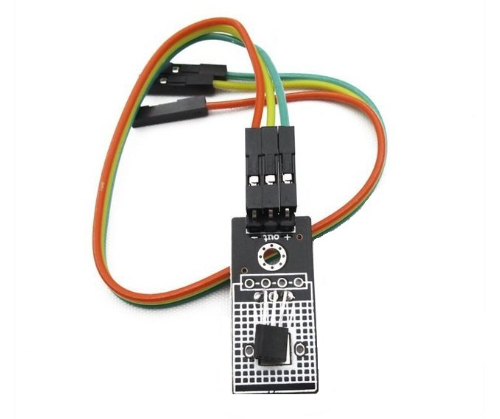
The Temperature Sensor Market, valued at USD 8.2 billion in 2023, is projected to expand at a compound annual growth rate (CAGR) of over 4% from 2024 to 2032. A key factor driving this growth is industrial automation. As manufacturing processes increasingly incorporate automation, the demand for precise temperature monitoring and control becomes essential. Automated systems depend on accurate temperature data to maintain optimal performance, efficiency, and safety.
In industries such as chemicals and pharmaceuticals, precise temperature control is crucial for ensuring product quality and safety. Similarly, in the food and beverage sector, maintaining correct temperatures is essential for preserving product integrity and preventing spoilage.
What are the Growth Opportunities in This Market?
The consumer electronics sector is a significant driver for the temperature sensor market. Modern devices like smartphones, tablets, wearables, and home appliances increasingly use temperature sensors to enhance functionality. In smartphones and tablets, these sensors manage battery performance and prevent overheating. Wearables, such as fitness trackers and smartwatches, use temperature sensors to monitor body temperature and provide health insights. Home appliances rely on temperature sensors for efficient operation and energy savings. As consumer electronics and smart home technologies evolve, the demand for advanced temperature sensing solutions is set to grow.
However, supply chain disruptions are a major challenge for the temperature sensor market. Production and distribution depend on a global supply chain involving raw materials, electronic components, and specialized equipment. Geopolitical tensions, natural disasters, pandemics, or logistical issues can cause shortages, delay production, and increase costs. Additionally, demand fluctuations or unforeseen events can lead to inventory imbalances and downtime for manufacturers.
Temperature Sensor Market Trends
A key trend in the temperature sensor industry is the integration with the Internet of Things (IoT) and smart devices. As IoT technology expands, temperature sensors are increasingly embedded in smart home devices, industrial IoT systems, and connected healthcare solutions. They enable real-time monitoring, automation, predictive maintenance, and improved operational efficiency. In smart homes, they regulate heating and cooling, while in industrial settings, they monitor equipment to prevent overheating and ensure safety. This integration is fostering innovation and creating new application opportunities.
Another trend is the rise of wireless and remote temperature sensors. These sensors offer easy installation, flexibility, and reduced wiring costs, making them ideal for challenging or hazardous environments. They are used in industries such as oil and gas, environmental monitoring, and agriculture, and are also gaining traction in healthcare and logistics for monitoring and tracking purposes. The shift towards wireless and remote sensors enhances versatility and accessibility.
Advancements in sensor technology have led to miniaturization and increased sensitivity. Miniaturized sensors are vital for compact applications like wearables and medical implants, while enhanced sensitivity allows for precise detection of small temperature changes. This trend is expanding the range of applications and driving market growth.
Temperature Sensors Range in Accuracy and Responsiveness
Certain applications, such as equipment used in the production of life-saving medications, demand highly responsive and accurate temperature sensors for critical quality control. In contrast, other applications, like the thermometer in your car, do not require sensors with such high levels of accuracy or responsiveness. The four most common types of temperature sensors, ranked from highest to lowest in terms of responsiveness and accuracy, are:
Negative Temperature Coefficient (NTC) Thermistors
Resistance Temperature Detectors (RTDs)
Thermocouples
Semiconductor-Based Sensors
Temperature Sensor Types
Negative Temperature Coefficient (NTC) Thermistor
An NTC thermistor is a thermally sensitive resistor whose resistance decreases as temperature increases. It provides precise measurements due to its large resistance change per degree Celsius, though its output is non-linear. NTC thermistors have an effective operating range of -50 to 250°C for glass-encapsulated types or up to 150°C for standard types. Their resistance-temperature (R-T) relationship can be linearized for specific applications.
Resistance Temperature Detector (RTD)
An RTD changes resistance with temperature and typically consists of a thin film or a wire wound around a ceramic or glass core. Platinum is used for high-accuracy RTDs, offering a linear output over a range of -200 to 600°C, though at a higher cost. Nickel and copper RTDs are less expensive but offer lower stability and accuracy compared to platinum.
Thermocouples
Thermocouples are made of two dissimilar metals joined at two points. The voltage difference between these metals reflects temperature changes. They are nonlinear and require conversion using lookup tables for accurate readings. While thermocouples have an accuracy range from 0.5°C to 5°C, they cover the broadest temperature range, from -200°C to 1750°C.
Semiconductor-Based Temperature Sensors
These sensors are often integrated into ICs and use two identical diodes with temperature-sensitive voltage and current characteristics to monitor temperature changes. They provide a linear response but have lower accuracy compared to other sensor types. Semiconductor sensors are less responsive and cover a narrower temperature range, typically -70°C to 150°C.
Temperature Sensing in Everyday Life
Temperature sensors play a crucial role in our daily lives by measuring the amount of heat emitted by objects or systems. These measurements enable us to detect and respond to temperature changes. One key function of temperature sensors is prevention. They can trigger alerts when a specific high temperature is reached, allowing for timely preventative measures. A prime example of this is fire detectors, which use temperature sensors to identify overheating and potential fire hazards.
Temperature Sensor Industry News
In July 2022, TE Connectivity acquired Linx Technologies, a leading player in the IoT RF component market. This acquisition expands TE's portfolio in connection products, particularly enhancing their offerings in antenna and RF connectors for the Internet of Things.
Also in July 2022, Siemens launched the RDG200 thermostat series, which features built-in control functions and a CO2 sensor. This new model allows for continuous monitoring and adjustment of indoor air quality, ensuring a healthier and more productive environment for building occupants.
GUOYUAN ELECTRONICScan offer a wide range of temperature sensorswith different specifications and features. You can visit our website or contact us directly to inquire aboutanalog temperature sensors, specifications, pricing, and any other details you may need to make an informed decision.

 Discrete Semiconductor Products
 Motors, Actuators, Solenoids and Drivers
 RF/IF and RFID
 Integrated Circuits (ICs)
 Inductors, Coils, Chokes
 English