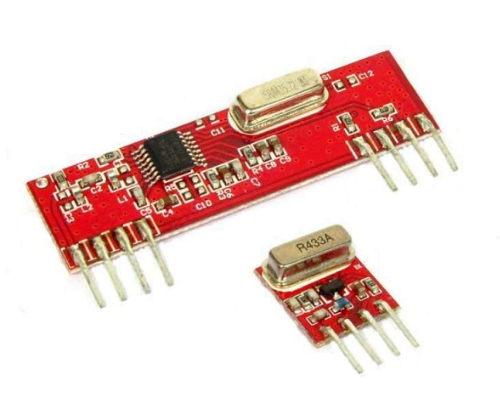
Quantum technology is making waves in various fields, and RF receivers are no exception. Quantum RF receivers leverage the principles of quantum mechanics to achieve unprecedented levels of sensitivity and noise reduction. These receivers have the potential to revolutionize fields like quantum communication and sensing, offering capabilities far beyond what traditional RF receivers can achieve.
RF Receivers Information
RF receivers are electronic devices designed to isolate specific radio signals from a myriad of transmitted signals and convert these isolated signals into audio, video, or data formats. The process begins with an antenna that captures the broad spectrum of radio signals. A tuner then plays a critical role in selecting and separating the desired signal from the multitude of signals received by the antenna. Following this, detectors or demodulators extract the encoded information from the chosen signal.
The methods used to decode or modulate this information include amplitude modulation (AM) and frequency modulation (FM). These techniques are essential in minimizing localized interference and noise. For instance, direct sequence spread spectrum (DSSS) involves spreading signals over a wide band by multiplexing the signal with a unique code or signature that modulates each bit. Another method, frequency hopping spread spectrum (FHSS), ensures that signals move through a narrow set of channels in a sequential, cyclical, and predetermined pattern. These advanced radio techniques enhance the reliability and clarity of the transmitted information.
Selecting RF Receivers
Selecting RF receivers requires an understanding of various modulation methods, such as AM and FM. The simplest form of modulation is On-Off Keying (OOK), which involves switching the signal on and off. Here’s a breakdown of key modulation techniques:
On Off Keying (OOK):
The simplest modulation method where the presence or absence of a signal represents binary data.
Amplitude Modulation (AM):
The amplitude of the carrier wave varies in accordance with the baseband signal, effectively embedding the information content in the height of the wave.
Frequency Modulation (FM):
The instantaneous frequency of a sine wave carrier deviates from the center frequency based on the instantaneous value of the modulating signal, conveying information through frequency changes.
Amplitude Shift Keying (ASK):
A digital modulation technique where the amplitude of the transmitted signal changes to represent data, similar to AM but used for digital signals.
Frequency Shift Keying (FSK):
A digital modulation scheme that uses multiple output frequencies to represent different data values. Each frequency corresponds to a distinct symbol in the digital data.
Phase Shift Keying (PSK):
In PSK, the phase of the transmitted signal is altered according to the baseband data signal, making it a robust digital modulation technique for transmitting data.
Understanding these modulation methods is crucial when selecting RF receivers, as different applications and environments may require specific modulation techniques to ensure optimal performance and signal integrity.
Performance Specifications
RF receivers vary based on performance specifications such as sensitivity, digital sampling rate, measurement resolution, operating frequency, and communication interface.
Sensitivity: This is the minimum input signal needed to produce a specified output signal with a given signal-to-noise (S/N) ratio.
Digital Sampling Rate: This refers to how frequently samples can be taken from a digital signal, measured in kilo samples per second.
Measurement Resolution: This indicates the smallest digital resolution the receiver can measure.
Operating Frequency: This is the range of signals the receiver can handle.
Communication Interface: This is the method used to output data to computers. Options include:
Parallel Interfaces: General purpose interface bus (GPIB), also known as IEEE 488 and HPIB Protocol.
Serial Interfaces: Universal Serial Bus (USB), RS232, and RS485.
Additional considerations for selecting RF receivers include:
Supply Voltage and Current: These specify the power requirements of the receiver.
Receiver Inputs and RF Connectors: These determine how signals are received and connected.
Special Features: Some receivers have visual or audible alarms or LED indicators for operating modes such as power on or signal reception.
Packaging and Durability: Receivers designed for outdoor use often feature a heavy-duty, waterproof design.
Additional Features: Some receivers have internal calibration, a frequency range switch, and ports for connecting antennas or coaxial cables.
Understanding these specifications and features will help you choose the right RF receiver for your specific needs.
Applications and Industries
RF receivers are utilized across numerous applications and industries. Devices that incorporate integrated circuits (ICs) often use surface mount technology (SMT), through-hole technology (THT), and flat pack designs. In telecommunications, RF receivers are typically designed to fit into metal racks for easy installation in cabinets. Additionally, RF receivers are integral components in radios and electronic article surveillance (EAS) systems commonly found in retail stores. In inventory management systems, RF receivers serve as an alternative to traditional barcode systems, enhancing efficiency and accuracy.
The Future of RF Receivers
The future of RF receivers is poised to be exciting, with continued advancements driving innovation across various sectors. As technology evolves, RF receivers will become even more integral to our daily lives, enabling seamless communication and connectivity.
1. Terahertz (THz) RF Receivers
The exploration of the terahertz frequency spectrum (0.1 to 10 THz) holds immense potential for RF receivers. Terahertz RF receivers can support ultra-high-speed data transmission and provide new opportunities for applications like high-resolution imaging and spectroscopy. Researchers are actively working on developing efficient terahertz RF receivers to unlock these possibilities.
2. Integration with 6G Technology
While 5G is still being deployed globally, researchers are already looking ahead to 6G technology. RF receivers will play a crucial role in the development of 6G networks, which promise even higher data rates, lower latency, and enhanced connectivity. The integration of advanced RF receivers with 6G infrastructure will be key to realizing the full potential of this next-generation technology.
GUOYUAN ELECTRONICS can offer a wide range of rf components with different specifications and features. You can visit our website or contact us directly to inquire about rf transmitter and receiver, specifications, pricing, and any other details you may need to make an informed decision.

 Discrete Semiconductor Products
 Motors, Actuators, Solenoids and Drivers
 RF/IF and RFID
 Integrated Circuits (ICs)
 Inductors, Coils, Chokes
 English